Free support, gathered in one place
Pet Loss Support
Resources
Real people, free phone lines, and quiet places to talk — gathered in one place so you don’t have to search while you’re hurting.
Area
Serving all of Los Angeles County
Arrival
Typically at your door within 2 hours
Hours
Phones answered 8am–8pm, every day

If you need a voice today
Who can I call right now about pet loss?
Free pet loss support hotlines are staffed by trained volunteers whose only job is to listen — these three are active and verified.
- Cornell University Pet Loss Support Hotline — 607-218-7457. Answered by veterinary students trained by professional grief counselors. Hours vary by semester, so if no one picks up, leave a voicemail and they will call you back.
- Tufts University Pet Loss Support Helpline — 508-839-7966. Staffed Monday through Thursday, 6–9pm Eastern (3–6pm California time), with 24-hour voicemail; messages are returned on the next staffed shift.
- Lap of Love Support Center — (855) 933-5683. Connects callers with free weekly virtual pet loss groups led by trained grief professionals.
All three lines are free and open to anyone, anywhere. You do not need to be a client of any veterinary school or company to call.
Places to be heard
Where can I talk with others who understand?
The Association for Pet Loss and Bereavement (aplb.org) runs free, scheduled online chat rooms hosted by trained pet loss volunteers — one of the longest-standing communities of its kind, and joining requires only a free account.
Lap of Love (lapoflove.com) offers free virtual sessions in two formats: larger listen-and-learn gatherings for people who prefer to quietly take things in, and smaller interactive Zoom groups guided by grief coaches.
PetLoss Partners offers virtual support groups, hosted chat rooms, and one-on-one sessions with pet loss specialists; a small donation is requested for its groups. Schedules and sign-up details are at petlosspartners.org.
Near Glendale & Los Angeles
Are there pet loss support groups near Glendale and Los Angeles?
Yes — Avedian Counseling Center in Glendale runs a therapist-led pet loss support group that meets virtually each week; an intake session is required first, and you can reach them at (818) 963-9353. It is a paid, professionally facilitated group, which some people find helpful when grief feels too heavy for a drop-in setting.
Many Los Angeles families also lean on the free national resources above — the hotlines and virtual groups welcome callers from anywhere. Just remember the East Coast lines run on Eastern time: Tufts’ staffed hours of 6–9pm Eastern are 3–6pm here in California.
If grief feels heavier than you can carry
You are not overreacting
If this loss has left you in real distress — not sleeping, not eating, or having thoughts of harming yourself — call or text 988, the Suicide & Crisis Lifeline, free and confidential, any hour of any day.
Grief for an animal can run as deep as any grief there is. Reaching out is not an overreaction; it is simply what the line is there for.
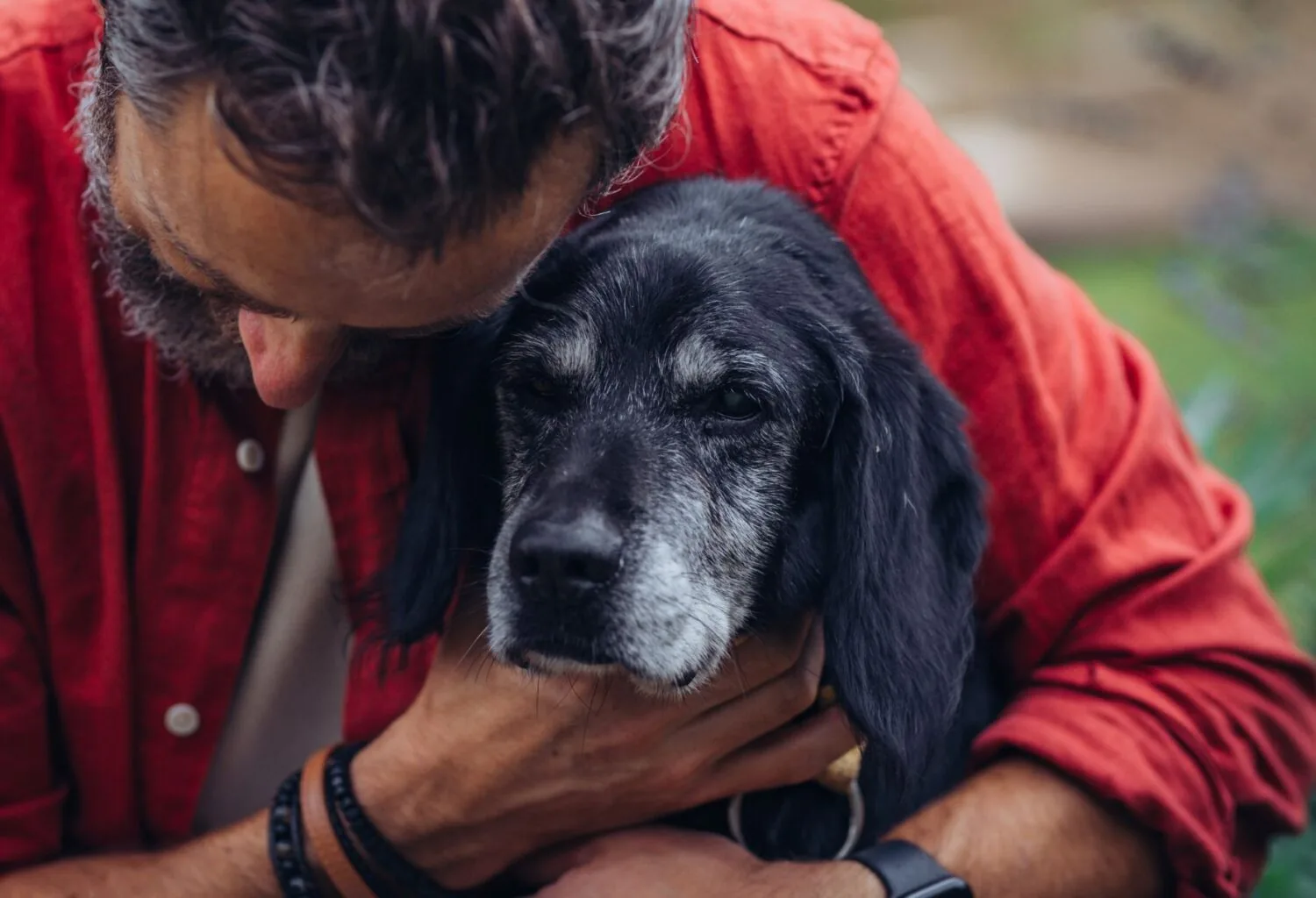
To read, and to read together
What are good books about losing a pet?
For adults, the most widely recommended titles come from grief counselors who have spent their careers on exactly this kind of loss. For children, these gentle picture books have comforted generations of families.
- The Loss of a Pet — Wallace Sife
- Goodbye, Friend — Gary Kowalski
- When Your Pet Dies — Alan D. Wolfelt
- The Tenth Good Thing About Barney — Judith Viorst
- Dog Heaven and Cat Heaven — Cynthia Rylant
- The Invisible Leash — Patrice Karst
- I’ll Always Love You — Hans Wilhelm
For the little ones
How do I help my child through the loss of a pet?
Use plain, honest words — “died” rather than “went to sleep” or “went away” — because young children take euphemisms literally, and “put to sleep” can leave them afraid of bedtime or of the vet.
Let them see that you are sad too; it teaches them their own feelings are safe to show. Including a child in a small goodbye — drawing a picture, choosing where a paw print will sit, telling a favorite story about their pet — gives them something to do with their love. Expect the same questions to come back again and again for weeks. That repetition is how children process loss, not a sign something is wrong.
The ones left behind
Do other pets grieve too?
Many dogs and cats show real changes after a companion animal passes — searching the house, eating less, sleeping more, or shadowing you from room to room.
The kindest response is steadiness: keep feeding times, walks, and bedtime the same, and offer extra quiet attention without forcing it. Most pets settle back into themselves over a few weeks. If yours stops eating for more than a day or two, or seems unwell rather than sad, a call to your veterinarian is worth making.
And if you simply want a human voice while you sort out what comes next, we’re here every day, 8am to 8pm, at (626) 340-0000.
A few honest answers
Questions About Pet Loss Grief
Is there a hotline for pet loss grief?
Are there free online pet loss support groups?
Is there a pet loss support group in Los Angeles?
How do I explain a pet’s death to my child?
Do dogs and cats grieve when another pet passes?
Is it normal to grieve this much over a pet?
A Glendale team, here for all of LA
We’re Nearby When You Need Us
When you’re ready for practical help with aftercare, we come to you — choose your city for local details.
We’re Here When You Need Us
For practical help, or just a human voice — 8am to 8pm, every day of the week.